
Most people only check one number before buying an RV. Here's why that's not enough — and how to research your full towing setup before you spend a dime.
When most people start shopping for an RV, they do the same thing: they look up their vehicle's maximum towing capacity, make sure the RV's GVWR is under that number, and assume they're good to go.
The problem? There are two other factors that determine whether you're actually safe to tow — and most people don't find out about them until it's way too late.
The Three Things That Actually Determine If You're Safe to Tow
When you're researching an RV for your vehicle, safe towing comes down to three things working together:
Towing Capacity
The total weight your vehicle is rated to pull. Important — but only part of the picture.
Payload Capacity
How much your truck can carry — including passengers, tongue weight, and anything in the bed or cab.
Gear Weight
Chairs, coolers, water tanks, propane, paddle boards, kids, dogs — it all adds up faster than you think.
It's the combination of these three factors that catches people off guard. You can be well under your max towing capacity and still be overweight on payload once you load up for a real trip.
Why Payload Is the Hidden Problem
Here's what catches most people off guard: even though your towing capacity says you're fine, your payload capacity might tell a completely different story.
When you hook up a trailer, the tongue weight — the downward force on your hitch — eats directly into your payload. Add two adults, two kids, a full water tank, propane, and all your camping gear, and suddenly that payload number is a lot tighter than you expected.
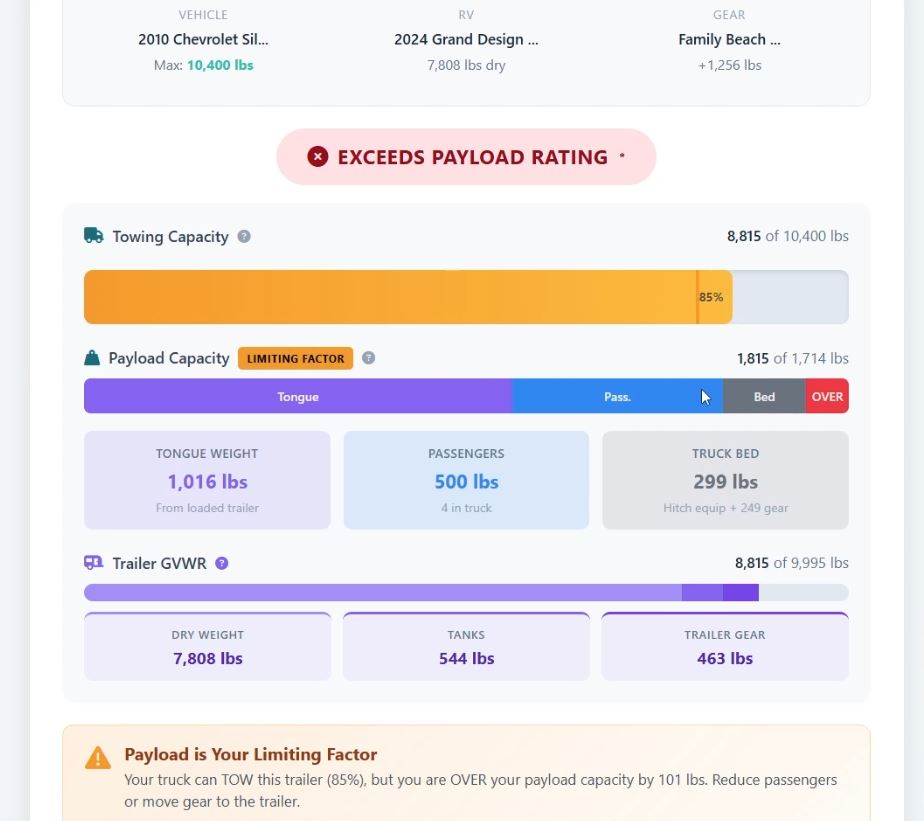
Depending on your truck's trim level, payload capacity can vary by hundreds of pounds between two trucks that look identical on paper. Always check the payload for your specific trim — not just the model.
This exact scenario happened with my dad. He had a Chevy Silverado and a Grand Design Reflection, and even though the towing numbers looked fine on paper, he was right at the edge on payload. He ended up upgrading to a GMC Denali 2500 just to have a safer margin.
That's an expensive lesson to learn after the fact.
A Better Way to Research RVs
This is exactly why we built MintRV.com — to help you find an RV that actually fits your truck before you ever hit RV Trader or walk onto a dealer's lot.
Here's how it works:
Step 1: Select Your Vehicle
Search from over 40,000 vehicles in our database. We pull in your max towing capacity, payload capacity, curb weight, and MPG automatically.
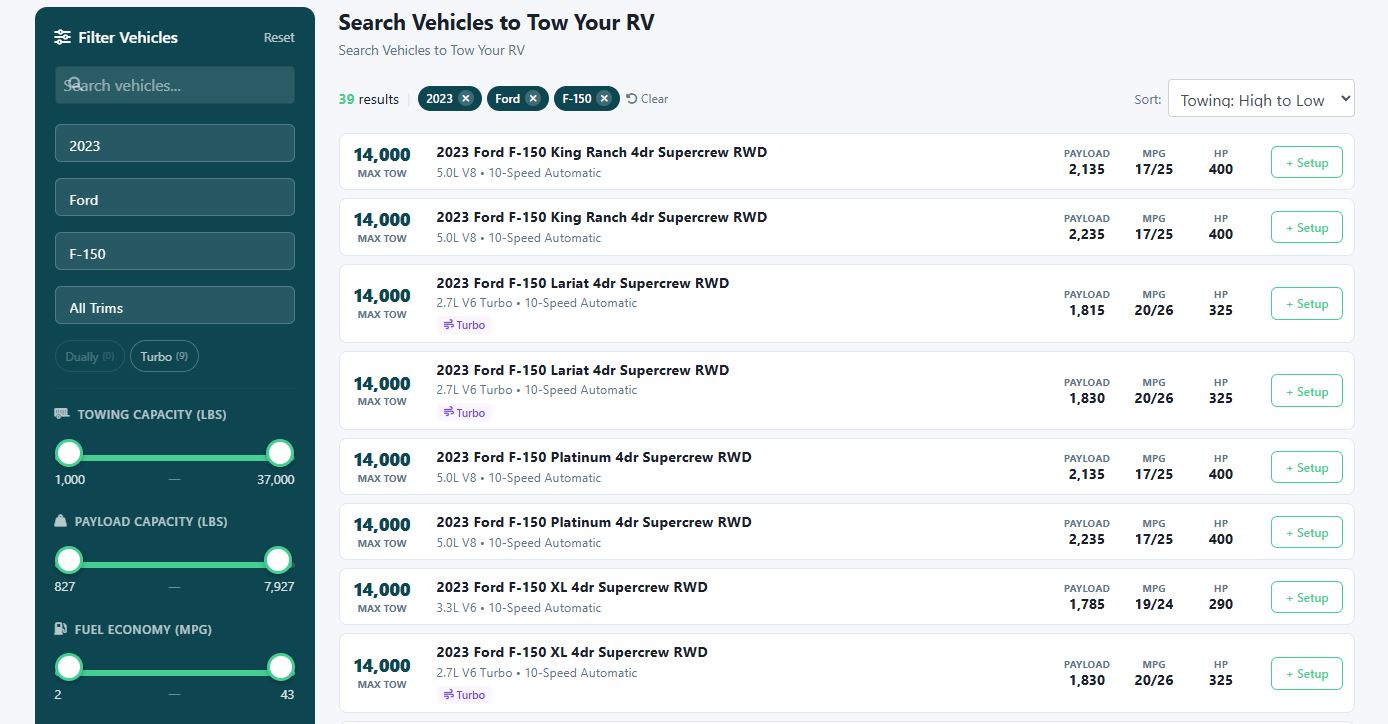
Step 2: Search for RVs
Browse over 70,000 RVs and filter by sleeping capacity, slideouts, axles, GVWR — whatever matters to you. One of the unique things we do is show you estimated MPG impact when towing, so you can factor fuel costs into your decision before you buy.
We also show your towing capacity with an 80% safe zone reference — an industry-standard buffer that accounts for real-world variables like road conditions, wind, elevation, and vehicle wear.

Step 3: Add Your Gear
This is the step that makes all the difference. Input your passengers, water tank levels, propane, and every piece of gear you plan to bring — from camp chairs to paddle boards to coolers full of drinks for five days on the beach.
You can even save custom gear presets for different trip types. For example, my hunting trip preset runs about 983 lbs of gear, while my family beach trip comes in around 1,200 lbs. That 300-pound difference alone could be what pushes you from safe to overweight.

Want to try it yourself? Create a free account to save your vehicles, RVs, and gear presets. No strings attached — no sales pitch.
Compare Multiple Builds Side by Side
Here's where it gets really powerful.
Once you've set up a vehicle, an RV, and your gear, you can save that as a "build" — a complete snapshot of your full towing setup. Then you can create more builds and compare them all on one screen.
Want to see how five different RVs would work with your truck and your gear? Save five builds and compare them side by side. You can instantly see which ones are within range, which ones are near the limit, and which ones are over.
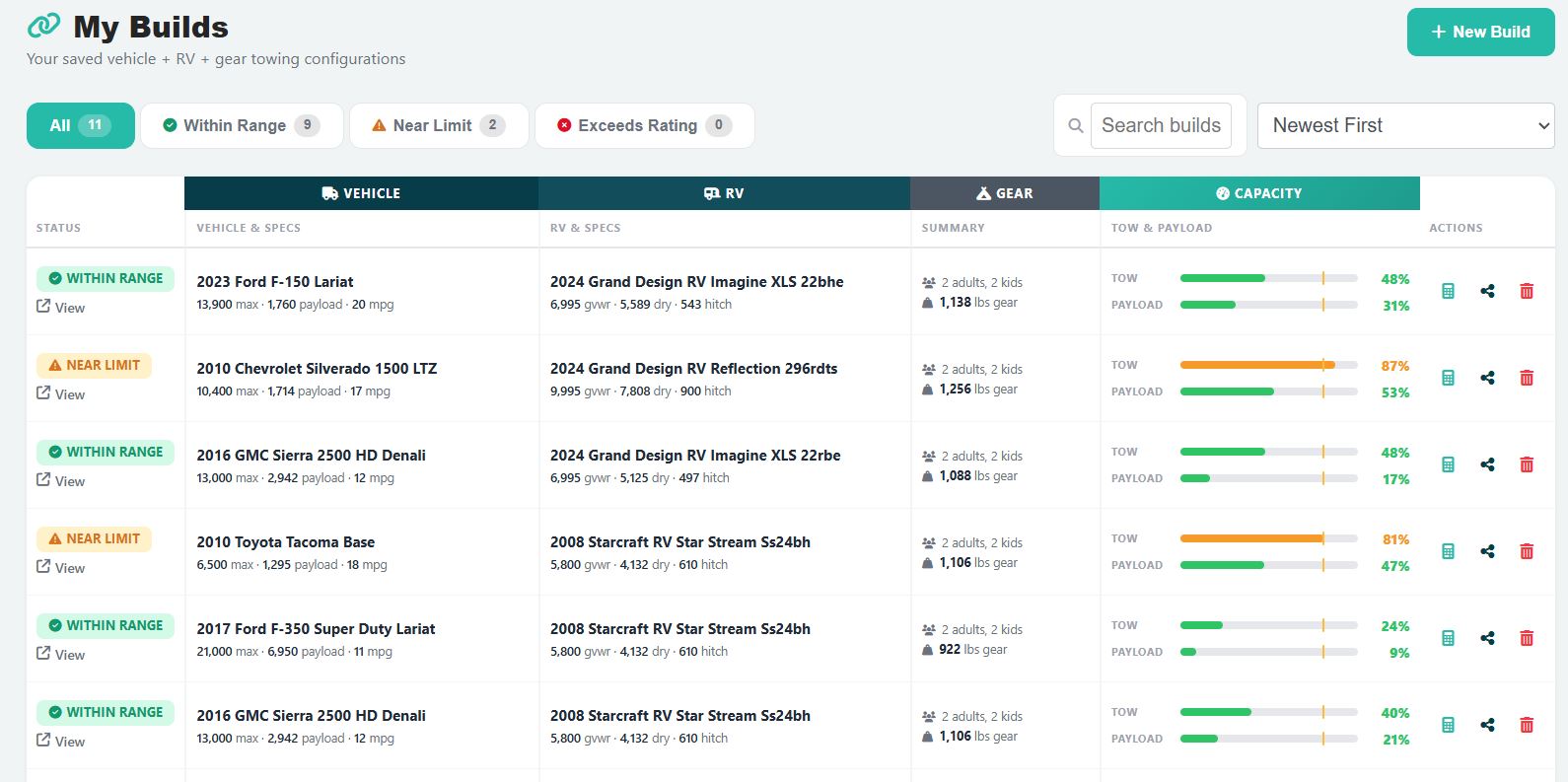
You can also flip it around. If you already own an RV and you're looking to upgrade your truck, you can compare how different vehicles handle the same trailer with the same gear. Same research tool, both directions.
What Each Build Shows You
No confusing spreadsheets. No guessing. Just a clear visual that tells you whether your setup works — or doesn't.
Do Your Research Before the Dealership
The whole point of MintRV is to give you the tools to make an informed decision before you feel the pressure of a sales floor. It's completely free, and there's no sales pitch waiting on the other side.
Create a free account, save your vehicles and RVs to your garage, set up your gear presets, and start comparing builds. By the time you walk into a dealership — or start browsing RV Trader — you'll already know exactly what fits your truck, your family, and your trip.
The worst time to find out you're overweight is after you've already signed the paperwork.
Ready to Start Your RV Research?
Compare your full towing setup — truck, RV, and gear — before you buy. Free forever. No sales pressure.
Create a Free AccountMintRV.com — Research before the dealership.